Media Training: How to Prepare for Interviews and Hard Questions
Media training teaches you to give clear, accurate answers under pressure. Here is what a good session covers, how to run practice interviews yourself, and when outside help is worth it.
 By Editorial Team
8 min read
By Editorial Team
8 min read
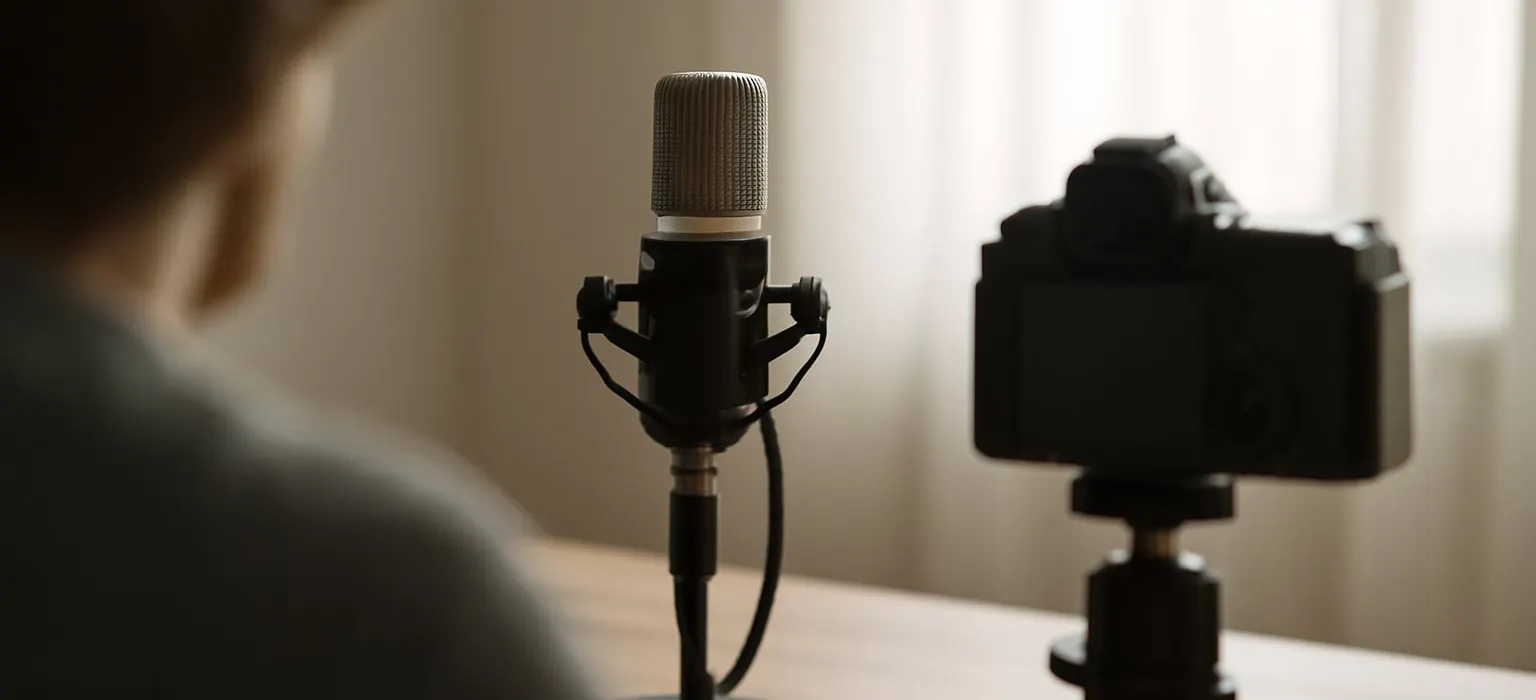
Media training is practical preparation for speaking to journalists: working out what you need to say, practicing it out loud, and rehearsing the difficult questions until you can answer them calmly and accurately. It doesn’t turn anyone into a polished performer, and it shouldn’t. Its job is to stop avoidable mistakes, like guessing, rambling, arguing or being quoted on something you never meant to say.
This guide explains what training covers, how to prepare for a specific interview, a practice routine you can run in-house, and when it’s worth bringing in a coach.
Who needs media training
Anyone who might be quoted on behalf of your organization. That usually means the CEO or owner, the person you would name as your spokesperson, and a few subject experts who get asked for comment on technical topics.
It also helps people who don’t expect interviews but might end up in one: a store manager when a TV crew shows up after an incident, a founder invited onto a podcast, a department head asked to speak at a public meeting. A single short session can prevent the classic mistakes.
The best time to train is before you need it. Training in the middle of a crisis is possible, but the stakes are higher and there’s less time to practice.
What media training covers
| Topic | What you learn |
|---|---|
| How journalists work | Deadlines, how stories are built, why reporters want a quote, how editing works |
| Ground rules | What “on the record”, “on background” and “off the record” can mean, and why to agree terms first |
| Key messages | Two or three clear points you want the audience to take away, with proof for each |
| Answering technique | Answering the question asked, then connecting to your message without dodging |
| Difficult questions | Hypotheticals, loaded wording, repeated questions, silence, “would you say that…” |
| Format differences | Print, live TV, recorded video, radio, podcasts and video calls |
| Crisis interviews | What you can and can’t say when facts are unclear or lawyers are involved |
| Body language and voice | Pace, eye contact, posture, and how nerves show up on camera |
Good training spends most of its time on practice, not slides. You should leave having answered your worst questions out loud several times.
How to prepare for a specific interview
- Find out the basics. Who is the reporter, what is the story about, who else are they speaking to, what format is it, and what’s the deadline? Asking is normal.
- Decide whether to do it. Most of the time, taking part means your side is included. Occasionally a written statement is safer, for example when there’s active litigation.
- Write two or three key messages. Short, plain sentences you’d be happy to see as the headline quote. Back each with a fact or example.
- List the questions you dread. Be honest. The question you least want is the one most likely to come.
- Draft true, short answers to each. Include the admission where there’s something to admit, and what you’ve done about it.
- Check facts and legal limits. Confirm numbers and dates. If there’s legal exposure, have your lawyer review what you plan to say.
- Rehearse out loud. Have a colleague play the reporter, including the awkward follow-ups.
- Agree ground rules before the interview starts. Assume everything is on the record unless you have explicitly agreed otherwise beforehand.
If the interview is about a negative story, our guide to handling negative press coverage covers the wider response, including corrections afterward.
Techniques that hold up under pressure
Answer, then bridge
You’ll hear about “bridging”: moving from the question to your message. It works only if you answer first. “Yes, the delivery was late for about a week. We’ve since added a second supplier so it doesn’t happen again” is a bridge. Ignoring the question and reciting a talking point is a dodge, and audiences notice.
Don’t repeat loaded language
If a reporter asks “Was this a cover-up?”, don’t reply “It wasn’t a cover-up”. That sentence can become the quote. Say what did happen instead: “We reported the issue to the regulator the day we found it.”
It’s fine to say you don’t know
“I don’t have that figure in front of me. I’ll get it to you by this afternoon” beats a guess. Then follow up.
Stop when you’ve answered
Reporters sometimes stay silent after an answer. Nerves push people to fill the gap, often with the sentence that gets quoted. Answer, stop, wait.
Hypotheticals and speculation
“What if more customers are affected?” invites speculation. You can decline to guess and say what you do know: “I won’t speculate, but here’s what we’ve confirmed so far and when we’ll update.”
The “no comment” trap
Saying “no comment” rarely helps. If there’s a real reason you can’t discuss something, say the reason. Our guide on whether to say no comment has alternative wording.
A DIY media training exercise
You don’t need a studio to get real value. This routine takes about an afternoon and works for small teams.
- Pick a realistic scenario: a product fault, a critical review going viral, a local reporter asking about a staff complaint.
- Write a one-paragraph “story” the reporter is working on, including one fact that’s wrong.
- Prepare key messages using the steps above. Keep them on one card.
- Run three short interviews, each a few minutes long: a friendly one, a skeptical one, and a hostile one with interruptions.
- Record and review each one. Did the speaker correct the wrong fact? Answer the questions? Avoid repeating loaded words? Say anything they would regret seeing in print?
- Run it again after the review. The improvement between the first and second round is usually obvious.
Rotate who plays the reporter. People who have to ask the hard questions learn quickly what an evasive answer looks like from the other side.
Not sure where to start?
Get a free audit of your search results and review profiles, with a prioritized fix list.
Get a free auditA worked example
This is an illustrative scenario, not a real client.
A family-owned bakery chain with a handful of locations gets a call from a local news reporter. A customer says she found a piece of plastic in a loaf and the store dismissed her complaint.
The owner’s first instinct is to say “our kitchens are spotless, this can’t have come from us”. In a quick practice session with her operations manager playing the reporter, she hears how that sounds: defensive, and a claim she can’t yet prove.
Her key messages become: we take any report like this seriously; we’ve contacted the customer and asked to examine the item; we’ve checked the production line and the batch records; and we’ll share what we find. Her hardest practice question, “Why did your staff ignore her?”, gets an honest answer: “That shouldn’t have happened. We’ve spoken to the team about how complaints are handled.”
The recorded interview runs for under a minute on the evening news. Her calm, specific answer is the quote. There’s no follow-up story.
Common mistakes
- Treating training as a performance class. The goal is clarity and accuracy, not charisma.
- Memorizing scripts. Read-out answers sound evasive. Know the messages, not the words.
- Training only the CEO. The person most likely to be caught off guard is often a manager at a location.
- Assuming a friendly chat is off the record. Small talk before and after an interview can be quoted.
- Never refreshing. Skills fade. A short practice session before any major interview helps.
- Using technique to hide the truth. If the facts are bad, media training can help you explain them honestly. It can’t make them good.
When to bring in outside help
In-house practice covers a lot. Outside coaching is worth considering when a senior leader faces a high-stakes interview, such as live national TV, a hostile investigative piece or a story with legal exposure, or when your team is too polite to push each other properly.
A good trainer should have real experience with journalists, run realistic practice interviews, and tell you plainly what isn’t working. Be wary of anyone who promises to make you “bulletproof” or teaches ways to avoid every question.
If an interview is part of a wider crisis, the press work sits alongside other tasks: statements, reviews, social media and search results. Our crisis management support covers that wider picture, and a crisis communication plan makes sure training ties into who does what when something goes wrong.
Frequently asked questions
How long does media training take?
A basic session for one person can be done in half a day, including several recorded practice interviews. Teams preparing for a crisis often add scenario practice over a longer session. A short refresher before any major interview is worth doing even if you’ve been trained before.
Can I do media training myself?
Yes, for the basics. Prepare key messages, list your hardest questions, have a colleague play the reporter, record the practice and review it. Outside coaching helps most for high-stakes interviews or when colleagues won’t push hard enough.
What is bridging in media training?
Bridging means moving from the question you were asked to one of your key messages. It works when you answer the question honestly first and then connect it to your point. Skipping the answer to deliver a talking point looks evasive.
Should I ask to see the article before it's published?
You can ask, but many journalists won’t share drafts. It’s more realistic to ask them to check specific facts or quotes with you, and to put your key facts in writing so there’s less room for error.